Minecraft: Village Mechanics Explained – These Tips Will Make You Unstoppable!
Village Elements
A village consists of the following elements: meeting point, size, number of job sites, number of houses, population (villager count), population cap (max villagers, based on house count), cat population, iron golems.
At minimum, one house and one villager are needed to form a village. A "house" refers to a bed. If a village has at least two villagers, it will try to keep the population at 100% of the number of houses.
Village Meeting Point
The village meeting point is the location of a bell recognized by villagers (usually near a claimed bed, though not necessarily within the village). When a bell is recognized, green particles appear above it. Once recognized, it is set as the meeting point. The meeting point is where villagers gather to socialize during the day. If a player is in the village, a wandering trader will spawn at the meeting point. If villagers gossip about an iron golem, one will spawn at the meeting point.
The bell must be within the village boundary to be considered the village center, so at least one villager and one bed are needed. With only one villager, one bed, and no bell, the villager won't socialize but will instead go looking for unclaimed beds.
During a raid, in Java Edition, villagers will go to the meeting point and ring the bell to warn others. In Bedrock Edition, the bell rings automatically.
Job Sites
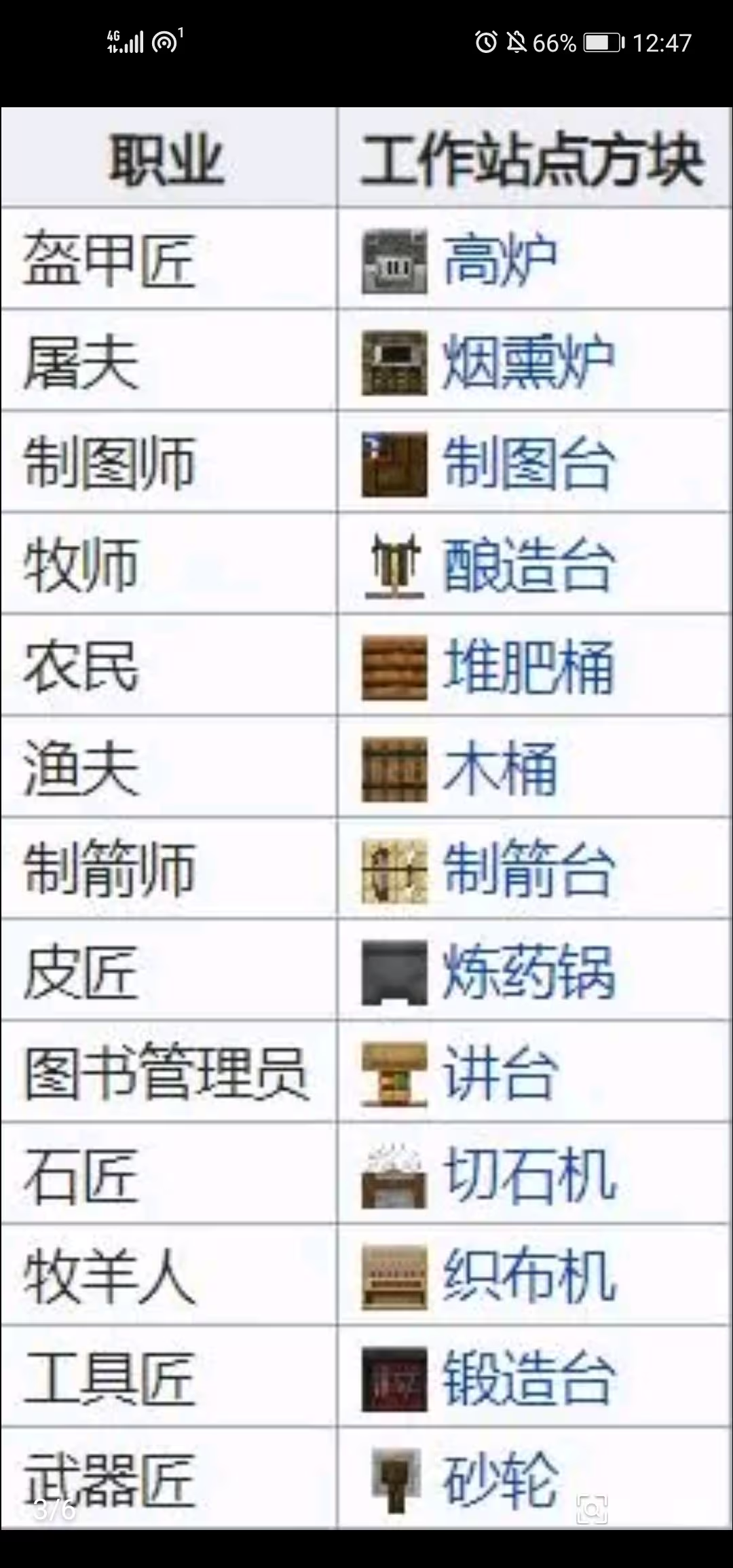
Villager mechanics are unique. Naturally generated villagers in the Overworld start without a profession, and nitwit villagers can also spawn. Villagers (except nitwits) will search for unclaimed job site blocks.
Naturally generated villages consist of two main building types: houses (any structure containing a bed) and work sites (structures containing a job site block). No villagers spawn inside work site buildings. If a naturally generated village only has work site buildings, villagers won't spawn, and it won't be recognized as a village.
Starting in the morning, employed villagers will work at their job site block throughout the day. Unemployed villagers, nitwits, and baby villagers don't have a workplace.
Like with claimed beds, once a villager chooses their job site block, they'll remember its location. Villagers work at their job site block in the morning and gather to chat at the meeting point in the afternoon.
Villager Breeding Willingness
Villagers can only breed when in a "willing" state!
Even though we encourage family planning, trading with villagers can make them willing again. The first time you complete a new trade offer, the villager becomes "willing to breed." After completing an old trade offer again, there's a 20% chance they become willing to mate.
However, this doesn't cause them to mate immediately – it just increases their willingness.
The second method is to give villagers 3 bread, 12 carrots, 12 potatoes, or 12 beetroots in their inventory to make them willing. Farmer villagers will occasionally toss harvested crops to other villagers, who can pick them up and gather enough food to become willing.
Cat Spawning
Cats are an indispensable part of a village. The number of cats that spawn in a village depends on the number of beds. As long as there is at least one villager, one cat can spawn for every four beds (beds don't need to be claimed). Up to 10 cats can spawn (requiring roughly 40 beds), and the village will respawn the corresponding number of cats based on the bed count.
If two villages each have 10 cats and then merge into one, the cats won't disappear. However, the cat cap remains at 10, so no new cats will spawn until the count drops below 10.
If you dislike the coat colors of the current village cats, you can remove them from the village to allow different types of cats to spawn.
Player Reputation in Villages
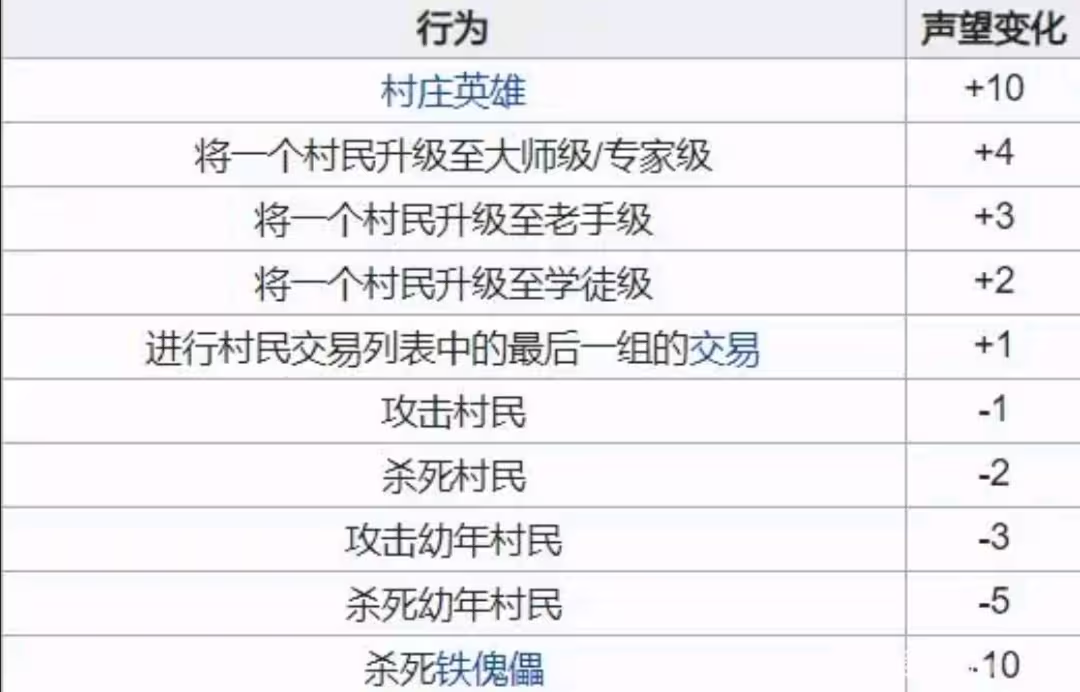
Reputation is a very important factor in villages. It determines the trade prices villagers offer you. Starting at 0, it ranges from -30 to 10.
The following actions can change your reputation.
When you interact with a villager in a certain way, particle bubbles appear around them, indicating a reputation change. Reputation doesn't reset upon death, and you can't alter another player's reputation.
Importantly, reputation is saved per village. A player may have high reputation in one village and very low in another.
If your reputation reaches -15 or lower, naturally spawned iron golems from that village will become hostile and attack you, until your reputation rises above -15 through trading.
Iron golems you build yourself will always remain passive toward you.